Turn Your Shares Into Monthly Income
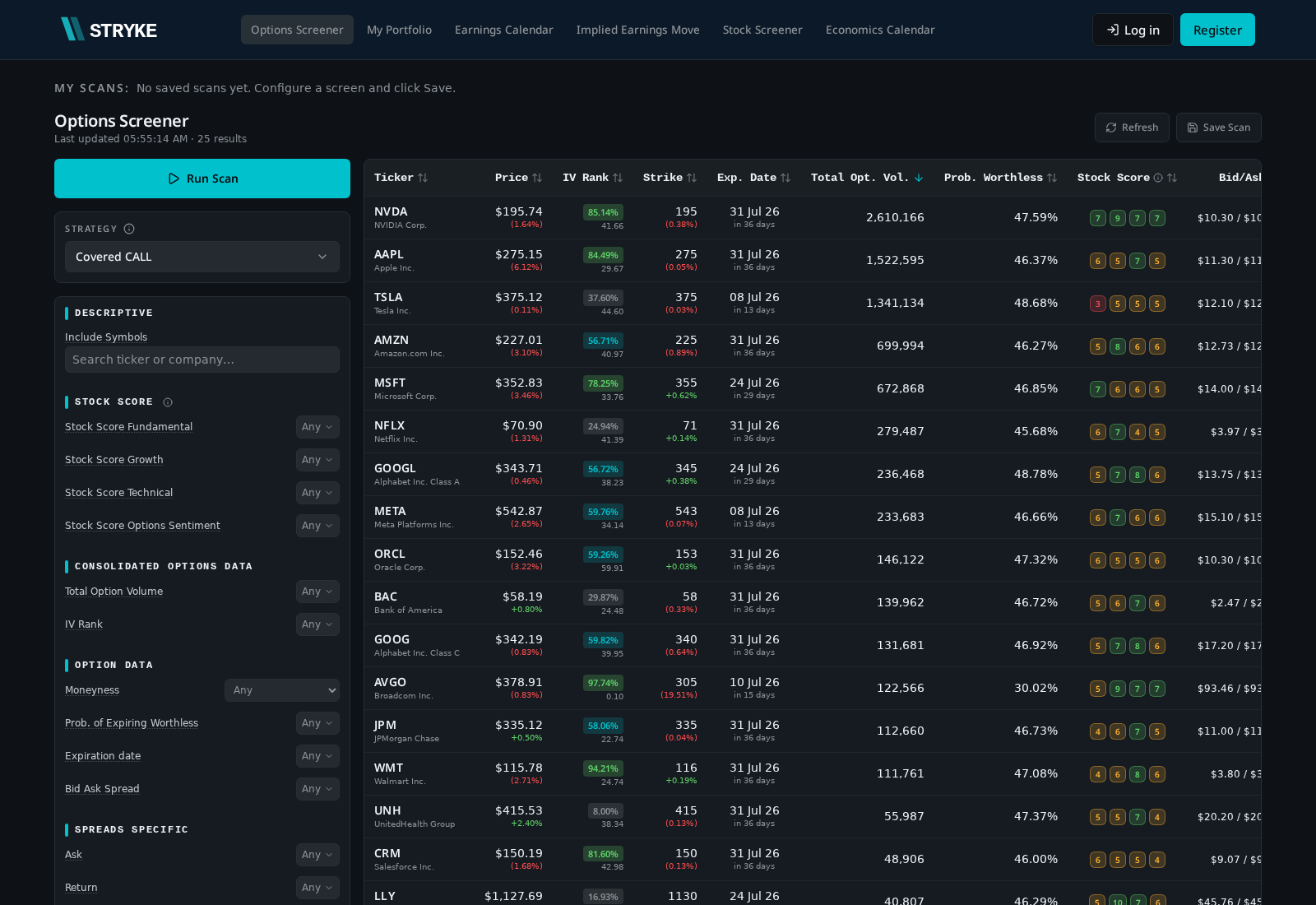
Find covered call candidates ranked by annualised yield, delta, downside protection, and IV Rank across the US equity and ETF universe.
No credit card required
What the screener shows
- Strike, expiry, bid and ask for the call leg
- Delta, so you can target your preferred assignment probability
- Annualised yield based on premium received and days to expiry
- Downside protection: how far the stock can fall before the call buyer breaks even
- IV Rank on the underlying, to confirm options are richly priced
A practical workflow
- Filter for IV Rank above 40 to make sure premium is worth selling
- Set delta between 0.20 and 0.35 to keep assignment odds modest
- Pick 30 to 45 days to expiry to balance theta and gamma
- Avoid names with earnings inside the expiry unless you want the gap risk
Our proprietary tools
Built for traders who want institutional-grade screening without the institutional price tag. Live data, real Greeks, real volatility, all in one place.
FAQ
What is a covered call?
A covered call is a position where you own 100 shares of a stock and sell one call option against them. You collect the premium and cap your upside at the call's strike price.
How should I pick the strike?
Most income-focused traders sell calls with delta between 0.20 and 0.35. Lower delta means a lower chance of assignment and less premium, higher delta means more premium and more chance of being called away.
What does annualised yield mean here?
Annualised yield projects the premium received as a yearly rate based on the days to expiry, so you can compare a 30-day call against a 60-day call on a like-for-like basis.
What happens at earnings?
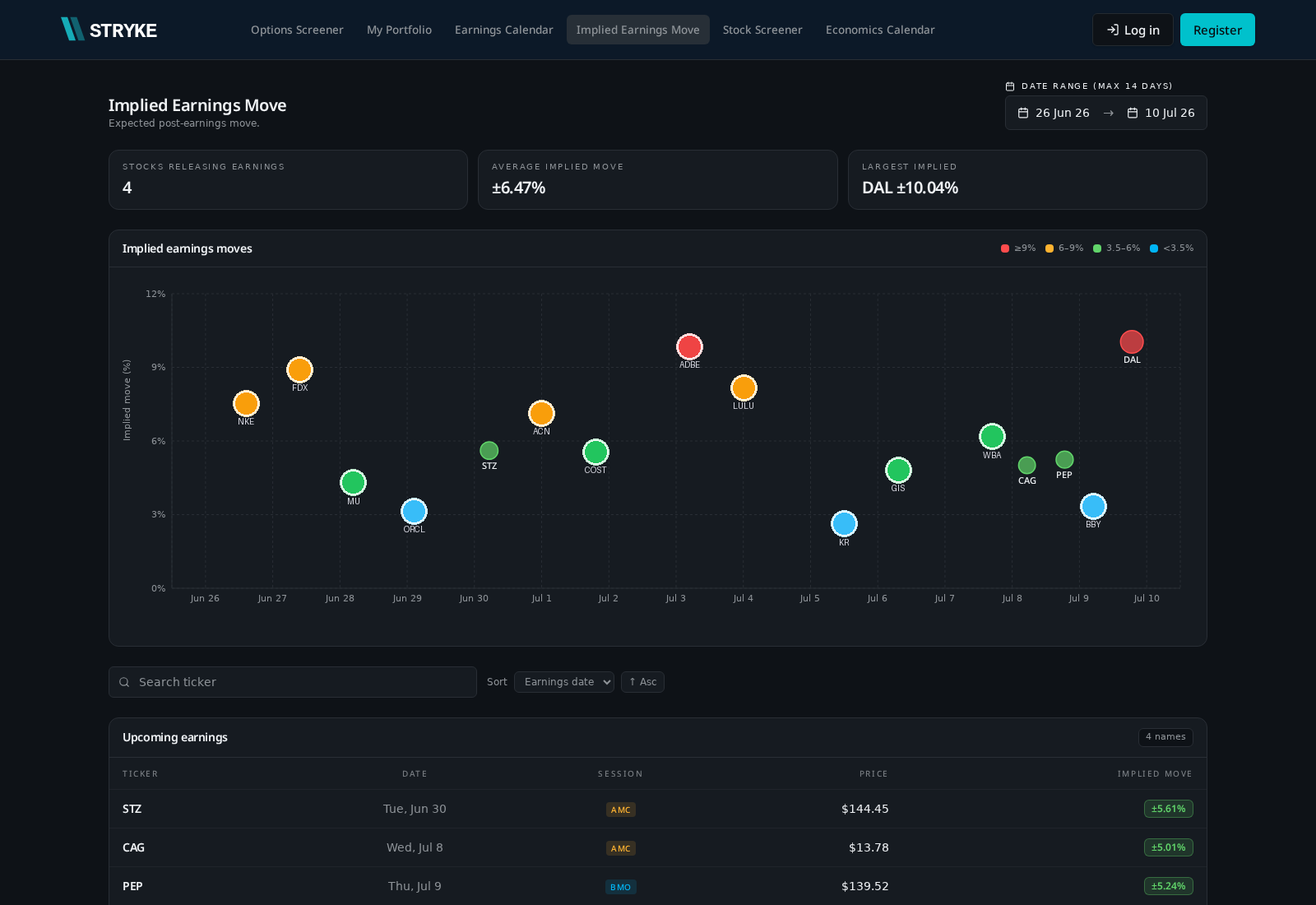
Covered calls written through earnings get inflated premium but carry gap risk. Stryke flags upcoming earnings in the screener so you can decide whether to roll, close, or hold.
Ready to find your edge?
Join traders using Stryke to surface opportunities across the US options market