Trade Where Volatility Pays You
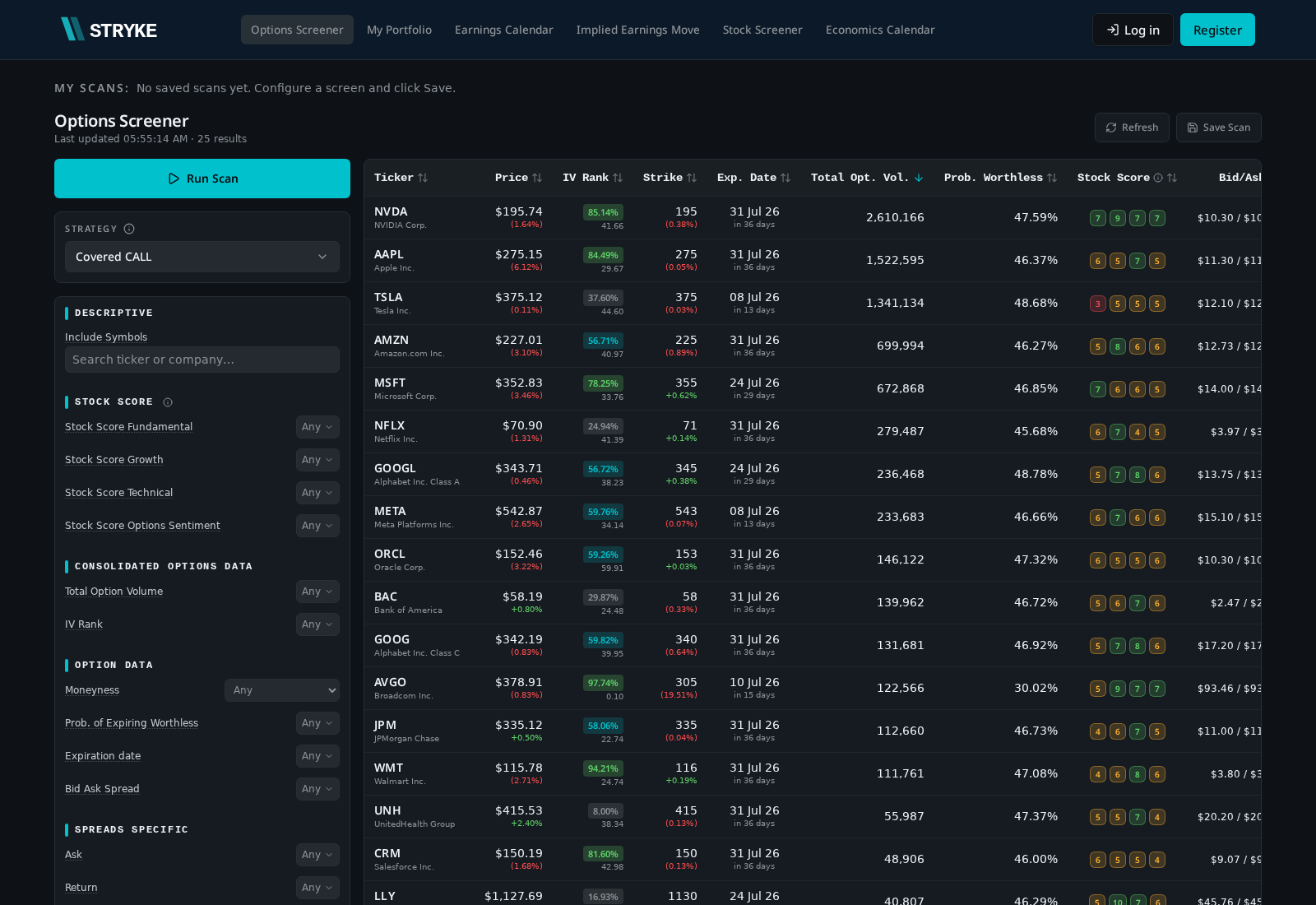
Stryke calculates IV Rank for the full US equity and ETF universe and updates it through the session. Sell premium when IV is rich, buy it when it's cheap.
No credit card required
How to use it
- IV Rank above 50: premium selling has a statistical edge
- IV Rank below 30: premium buying setups are cheaper than usual
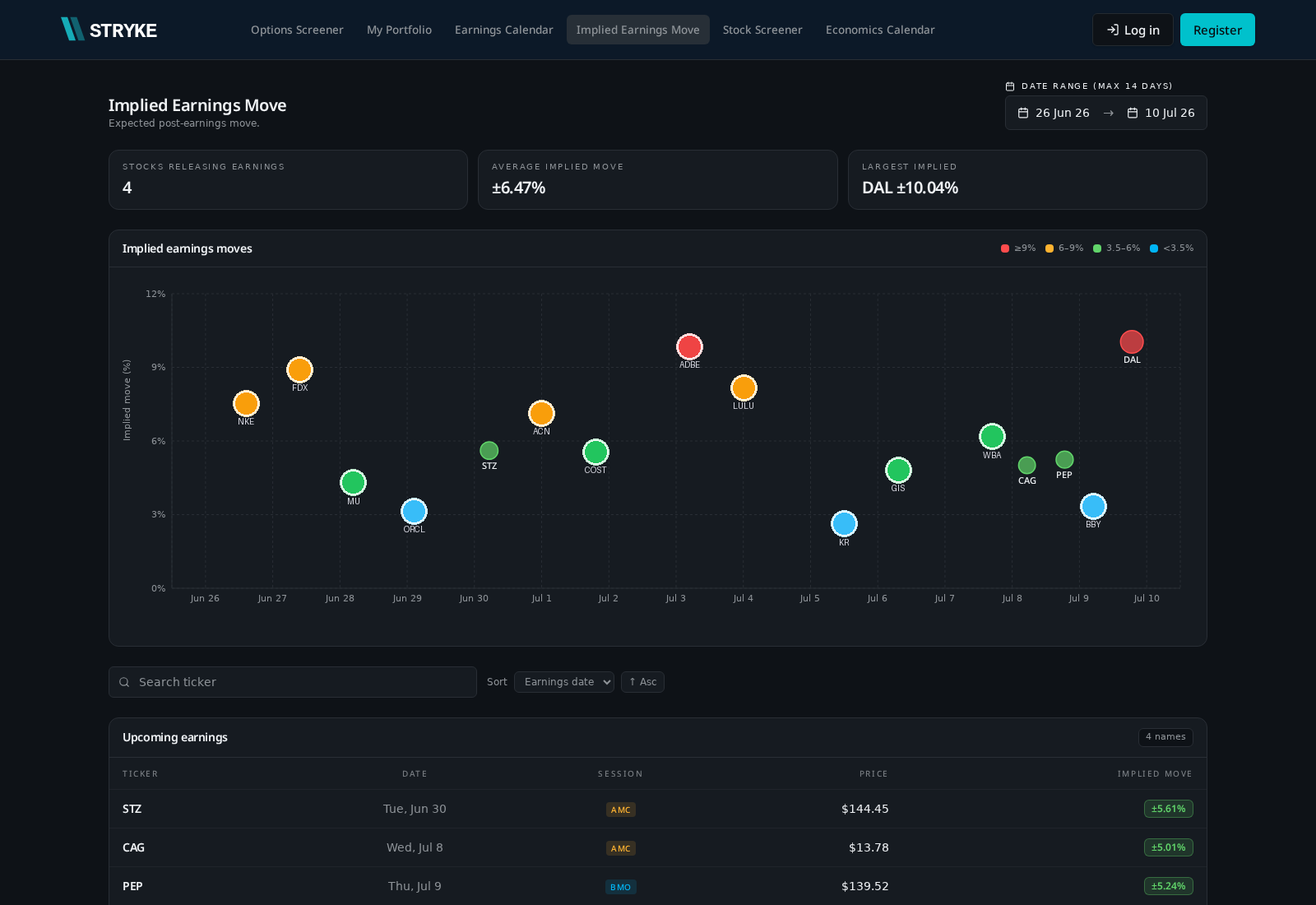
- Pair with the Expected Move column to size strikes around earnings
- Cross-check against the underlying's technical and fundamental score
Our proprietary tools
Built for traders who want institutional-grade screening without the institutional price tag. Live data, real Greeks, real volatility, all in one place.
FAQ
What is IV Rank?
IV Rank measures where current implied volatility sits inside the past 52 weeks of IV, on a 0 to 100 scale. A reading of 80 means IV is higher than 80 percent of readings over the last year.
How is IV Rank different from IV Percentile?
IV Rank uses only the 52-week high and low of IV. IV Percentile counts the share of days IV traded below today's level. Both summarise the same idea, IV Rank reacts faster to a new high or low.
When is high IV Rank useful?
High IV Rank favours premium selling structures like short strangles, iron condors, and credit spreads, because options are richly priced relative to their own history.
When is low IV Rank useful?
Low IV Rank favours premium buying, long calls, long puts, debit spreads, and calendars, since options are cheap relative to their own history.
Ready to find your edge?
Join traders using Stryke to surface opportunities across the US options market