Find Vertical Spreads With Real Edge
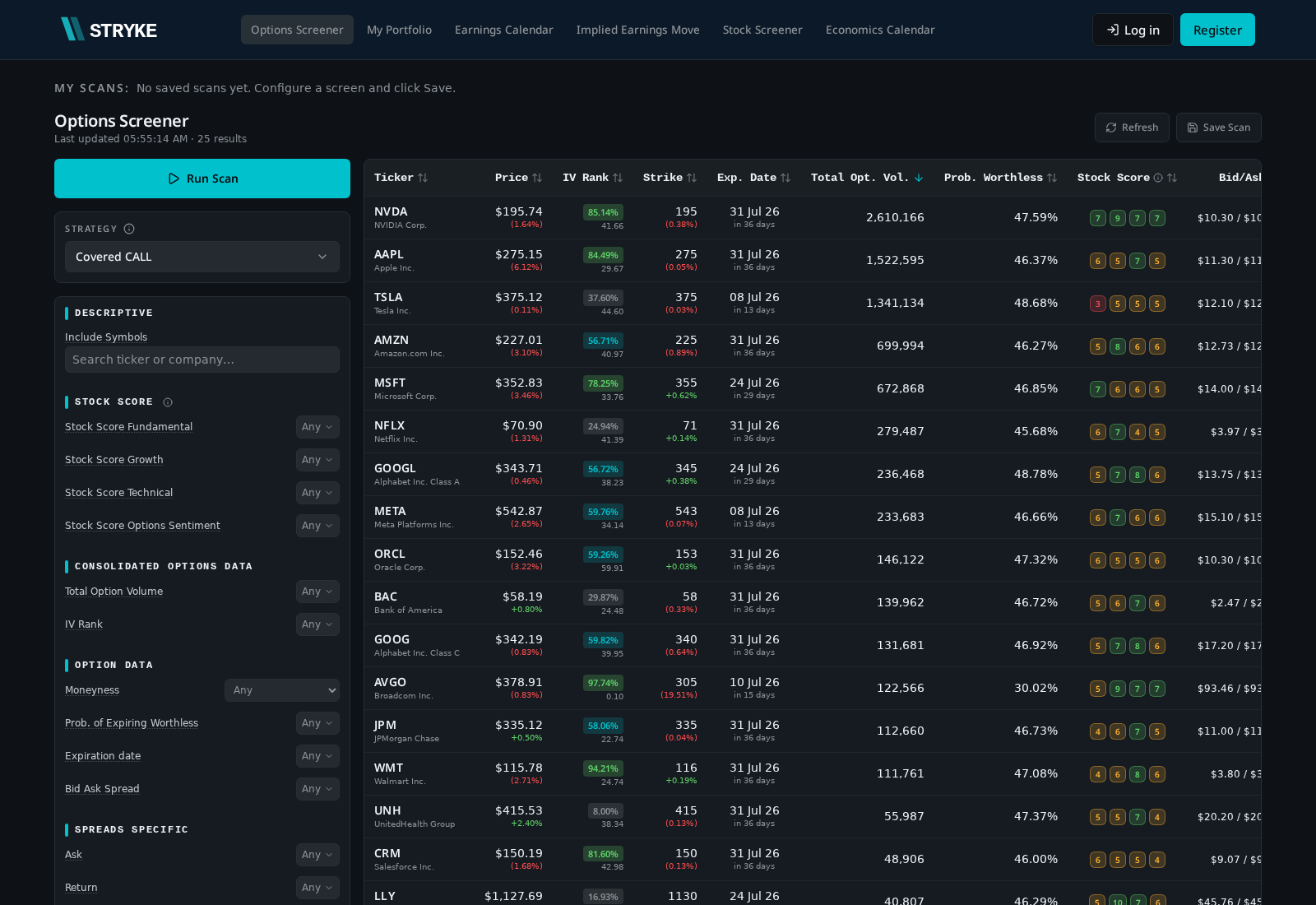
Stryke prices bull and bear, credit and debit vertical spreads live across the US options market and ranks them by expected value, max profit, and probability of max profit.
No credit card required
Strategies covered
- Bull call spreads (debit) and bull put spreads (credit)
- Bear call spreads (credit) and bear put spreads (debit)
- Custom strike widths and any DTE inside your filter
- Live bid and ask with a fallback ladder so pricing is always realistic
How to pick the right setup
- Start from a directional thesis from the Stock Score and technical pillars
- Use IV Rank to decide between credit (high IV) or debit (low IV) construction
- Target 30 to 45 days to expiry to balance theta and gamma
- Pick short strikes around 0.20 to 0.30 delta for credit spreads
- Sort by expected value and probability of max profit, then sanity-check max loss
Our proprietary tools
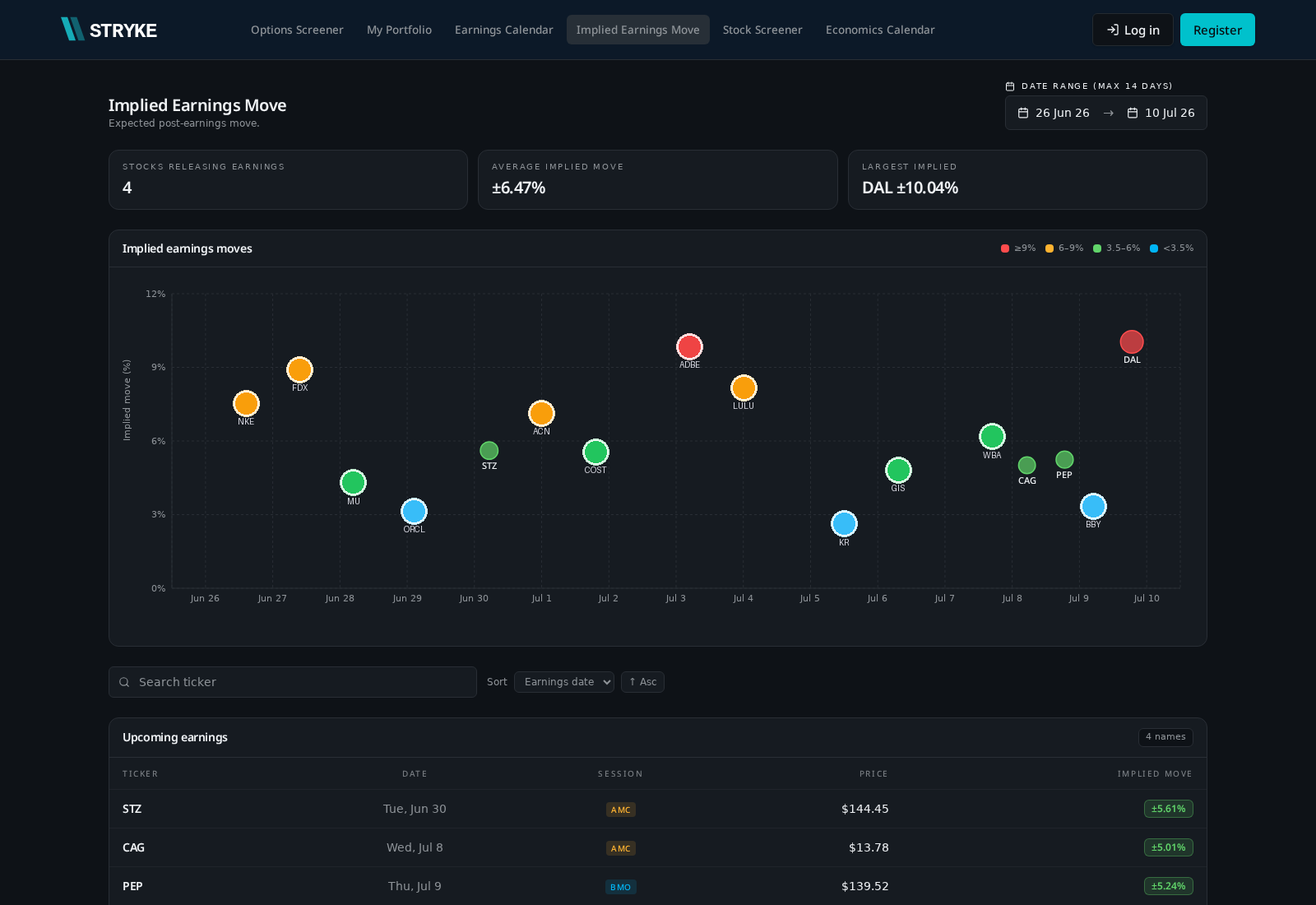
Built for traders who want institutional-grade screening without the institutional price tag. Live data, real Greeks, real volatility, all in one place.
FAQ
What is a vertical spread?
A vertical spread is a two-leg position that buys one option and sells another of the same type and expiry at different strikes. It defines both maximum profit and maximum loss upfront.
When do I use credit vs debit spreads?
Credit spreads (bull put, bear call) profit from time decay and work best when IV Rank is elevated. Debit spreads (bull call, bear put) need a directional move and are cheaper when IV is low.
How does Stryke rank spreads?
Every two-leg combination inside your filters is priced from the live chain and ranked by expected value, profit ratio, max profit, max loss, and probability of max profit.
What width should I pick?
Narrow widths give a smaller max loss but lower premium. Wider widths increase both. Stryke surfaces the credit-to-width ratio so you can compare like for like.
Ready to find your edge?
Join traders using Stryke to surface opportunities across the US options market